


A Practical Prompt Library for Non-Clinical Healthcare Workflows
Generative AI can help healthcare teams organize administrative ideas, prepare initial drafts, develop training materials and structure communication tasks. However, AI-generated information may be incomplete, outdated, biased, fabricated or unsuitable for a particular healthcare environment.
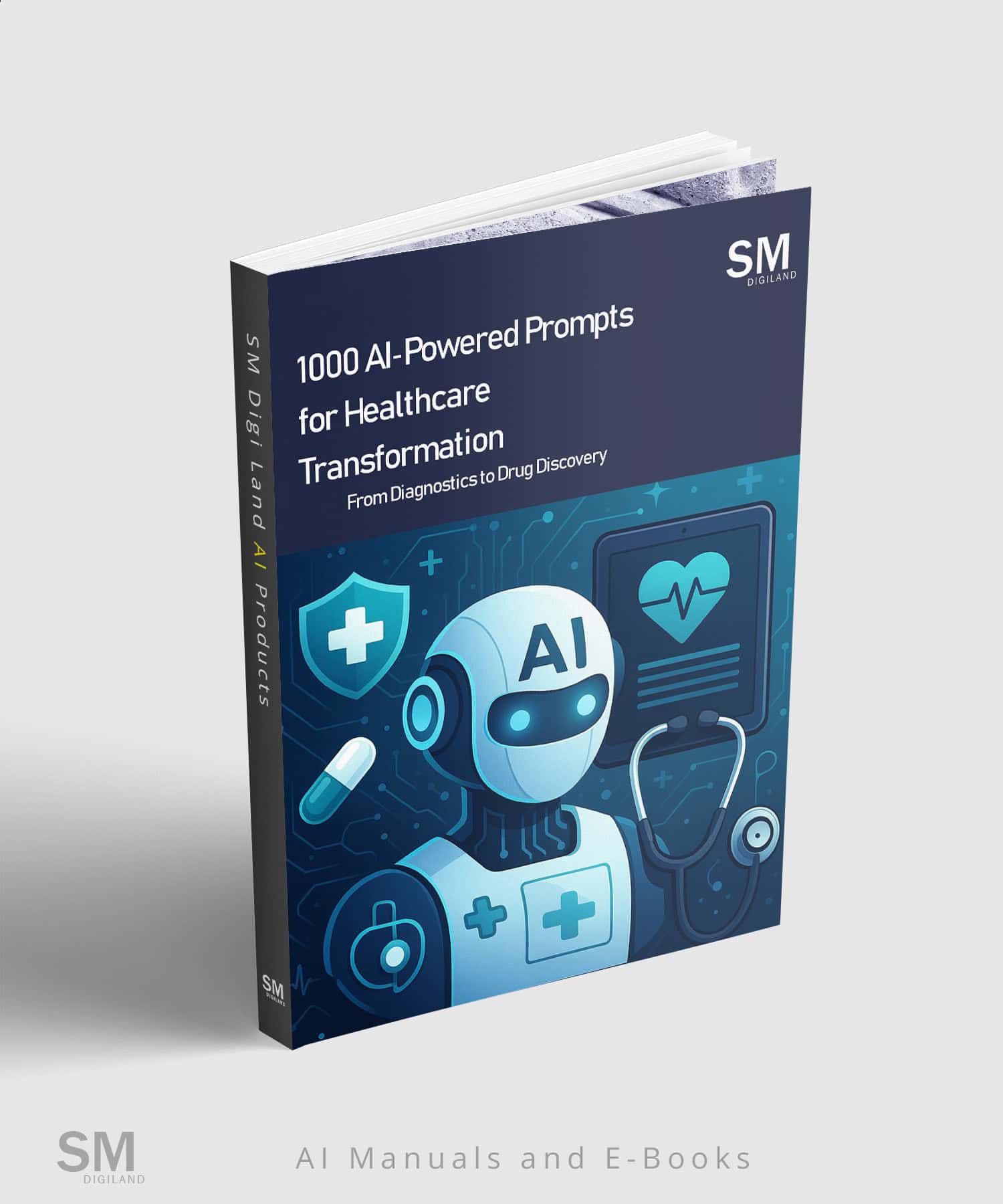
1000 AI Prompts for Healthcare Operations, Documentation and Communication is an English digital guide designed to support structured, non-clinical AI-assisted workflows.
The book is offered as general educational material. It is not a medical device, healthcare service, clinical decision-support system or replacement for professional judgment.
What the Prompt Collection Covers
Healthcare Operations and Workflow Planning
Develop draft workflows, role descriptions, meeting agendas, administrative checklists, task maps and process-improvement questions for review by authorized healthcare personnel.
Non-Clinical Documentation Drafts
Prepare neutral templates, document structures, internal summaries and administrative writing drafts without submitting identifiable patient information.
Patient-Education Content
Create initial drafts of general educational material, frequently asked questions and plain-language explanations. Every draft must be reviewed for medical accuracy, suitability, accessibility and compliance before publication or distribution.
Healthcare Communication
Structure appointment instructions, general service information, feedback forms, internal announcements and communication guidelines without producing individualized medical advice.
Staff Training and Professional Development
Develop training outlines, discussion questions, fictional scenarios, knowledge checks and workshop materials for administrative and communication-focused learning.
Quality-Improvement Planning
Organize non-clinical improvement questions, stakeholder feedback, process observations, administrative metrics and implementation considerations.
Healthcare Content Development
Prepare drafts for educational articles, presentations, awareness campaigns, social-media content and public information materials, subject to professional and compliance review.
Responsible Marketing and Outreach
Plan accurate, respectful and non-misleading healthcare communication without promising clinical outcomes or exploiting a person’s health condition.
Privacy, Ethics and AI Governance
Review possible privacy risks, human-oversight requirements, bias concerns, transparency statements, approval processes and acceptable-use rules.
Evaluating AI-Assisted Workflows
Develop questions for examining data quality, sources, limitations, accountability, performance claims and suitability before an AI tool is considered for institutional use.
What This Book Must Not Be Used For
The prompts must not be used to obtain or provide:
- A diagnosis or differential diagnosis
- Medical triage or emergency guidance
- Patient-specific treatment recommendations
- Prescription or medication advice
- Drug-dosage calculations
- Interpretation of an individual patient’s laboratory results
- Instructions to start, stop or change treatment
- Automated clinical decisions
- Unsupervised patient communication
- Substitution for a licensed healthcare professional
In an emergency or urgent medical situation, users must follow the approved emergency procedures applicable to their location and healthcare institution.
AI-Generated Healthcare Content Requires Human Review
Generative-AI systems may fabricate medical references, use outdated guidelines, omit contraindications, misinterpret terminology or produce an answer that sounds authoritative despite being incorrect.
Before using any output, an appropriately qualified person should verify:
- All factual and medical statements
- Dates and versions of guidelines
- Sources, citations and links
- Medication and product names
- Local laws and regulatory requirements
- Institutional policies and approved procedures
- Language accessibility and cultural suitability
- Potential bias, exclusions and safety risks
Patient Data and Confidentiality
Do not enter real patient names, identification numbers, contact details, medical-record numbers, images, laboratory results, insurance information or other identifiable health information into a public AI assistant.
Use fictional, synthetic or properly de-identified examples. Healthcare organizations should use only appropriately approved systems and follow their applicable privacy, information-security, data-processing and data-location requirements.
How to Use the Book
- Select a prompt relevant to a non-clinical task.
- Replace the sample variables with fictional, public or properly authorized information.
- State the intended audience and permitted use.
- Tell the AI not to invent missing information or sources.
- Request a clear separation between facts, assumptions and suggestions.
- Ask for sources and independently verify them.
- Review the output for privacy, accuracy, bias and regulatory concerns.
- Obtain the required professional or institutional approval.
- Edit the material before publication or operational use.
Who Is This Book For?
- Healthcare administrators
- Clinic and practice managers
- Healthcare communication teams
- Medical-content professionals
- Healthcare educators and trainers
- Quality-improvement teams
- Researchers examining non-clinical workflows
- Professionals studying responsible AI adoption in healthcare
What Is Not Included?
- An AI account or subscription
- API access or usage credits
- A medical database or journal subscription
- Electronic health-record integration
- Patient monitoring
- Telemedicine or telehealth services
- A regulated medical device
- A clinical decision-support system
- Medical consultation
- Professional certification or continuing-education credits
Product Details
- Title: 1000 AI Prompts for Healthcare Operations, Documentation and Communication
- Format: Digital PDF
- Language: English
- Number of prompts: 1000, to be confirmed against the final PDF
- Number of pages: Confirm against the final PDF before publication
- Price: $22.00, excluding applicable taxes
- Delivery: Digital download after purchase
- SKU: SMDL-DL-027
- Edition: [ADD EDITION]
- Last updated: [ADD DATE]
Frequently Asked Questions
Can this book be used to diagnose a patient?
No. It is not designed, validated or offered for diagnosis, triage, treatment or patient-specific clinical decisions.
Can I paste a patient’s medical record into an AI assistant?
No. Never submit identifiable patient or confidential health information to a public AI service. Follow your organization’s approved privacy and security procedures.
Are the AI-generated answers medically verified?
No. AI outputs may be inaccurate, incomplete or outdated. Every material statement must be independently checked by an appropriately qualified person.
Does the purchase include access to ChatGPT or another AI tool?
No. AI accounts, subscriptions, APIs and usage credits must be obtained separately.
Does the book include a medical database?
No. It does not include live guidelines, journals, medical databases or clinical reference subscriptions.
Does it provide continuing-education credits?
No. No professional accreditation or continuing-education credit is included unless expressly stated and independently documented.
Is it a physical book?
No. It is delivered digitally as an English PDF. No physical product will be shipped.
Develop More Structured and Responsible Healthcare Workflows
Use the prompt collection to prepare non-clinical drafts, organize administrative ideas, develop educational materials and evaluate AI-assisted workflows while maintaining professional review, privacy protection and human accountability.
This product is independently created and is not affiliated with, sponsored by, certified by or endorsed by OpenAI, Anthropic, Google, any healthcare authority, hospital, professional association or medical institution. Third-party names and trademarks belong to their respective owners.


