


Use AI to Support the Business Side of Your Art Practice
Developing an artistic career involves more than creating strong work. Artists also need to communicate their identity, present their portfolio, connect with audiences, promote exhibitions, manage digital channels, and make informed business decisions.
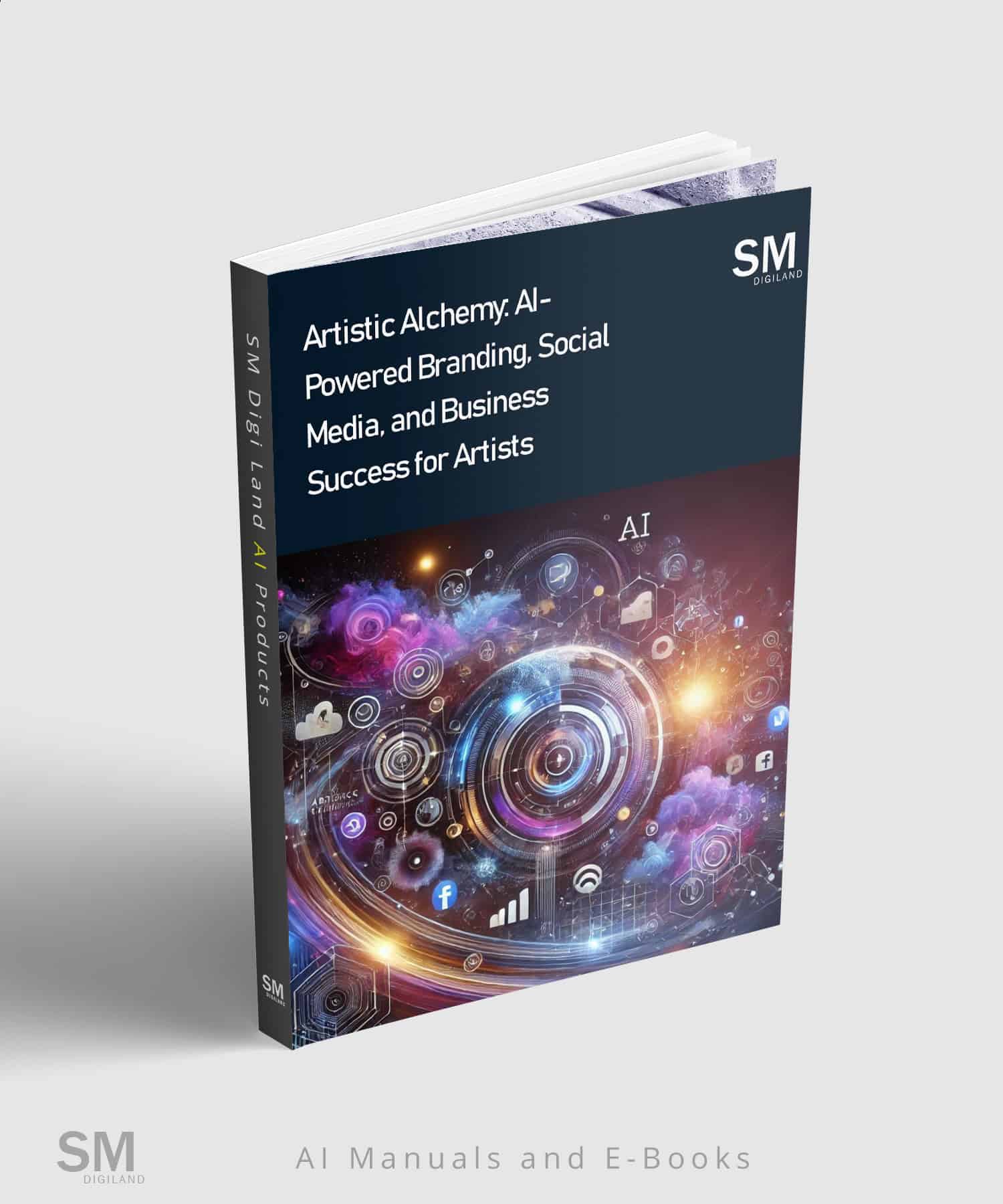
Artistic Alchemy: A Practical AI Guide to Branding, Marketing and Art Business is a 43-page digital guide for artists who want to use generative AI more intentionally across the communication and business side of their creative practice.
The guide explores practical applications of AI for artist branding, biographies, statements, marketing copy, social media planning, portfolio presentation, email communication, online art promotion, business organization, and repetitive administrative tasks.
AI is presented as an assistant for research, ideation, drafting, organization, and experimentation—not as a replacement for the artist’s identity, creative judgment, professional relationships, market knowledge, or final decision-making.
What Can This Guide Help You Work On?
- Defining a clearer and more consistent artist brand
- Drafting and improving artist biographies and statements
- Preparing exhibition announcements and artwork descriptions
- Planning content for Instagram, Facebook, TikTok, and other channels
- Developing a more organized social media content calendar
- Improving the structure of an online portfolio or artist website
- Preparing marketing copy for artworks, exhibitions, and creative projects
- Exploring suitable online art marketplaces and promotional channels
- Planning newsletters and audience-engagement emails
- Organizing research related to pricing and art-business decisions
- Developing repeatable workflows for common communication tasks
- Evaluating AI-generated material before public or professional use
Ten Focused Topics Covered in the Book
1. Building a Distinctive Artist Brand with AI
Explore how AI can help you clarify your artistic identity, recurring themes, values, audience, positioning, communication style, and visual-brand direction without reducing your practice to generic marketing language.
2. Artist Statements and Professional Biographies
Develop clearer drafts for short and long biographies, artist statements, portfolio introductions, exhibition profiles, grant materials, press information, and platform-specific descriptions.
3. Marketing Copy for Artworks and Exhibitions
Prepare structured drafts for artwork descriptions, exhibition announcements, invitations, landing pages, promotional captions, press materials, and collector-facing communications.
4. Social Media Content for Artists
Use AI to plan platform-specific ideas for Instagram, Facebook, TikTok, and other digital channels, including studio stories, artwork presentations, educational posts, process videos, reels, carousels, and audience conversations.
5. Artist Portfolios and Websites
Review portfolio structure, artwork organization, website navigation, artist information, project pages, calls to action, search visibility, accessibility, and the overall experience provided to visitors.
6. Promoting and Selling Art Online
Explore how to prepare artwork listings, marketplace profiles, product information, collector FAQs, enquiry workflows, and promotional plans for suitable websites and online art platforms.
7. Email Marketing and Audience Communication
Develop newsletters, exhibition invitations, studio updates, welcome emails, collector follow-ups, collaboration messages, and audience-engagement plans while maintaining a professional and personal voice.
8. Pricing Research and Art-Business Planning
Use AI to organize relevant inputs, compare pricing considerations, identify missing information, structure financial questions, and develop planning scenarios. Final pricing decisions must still reflect the artist’s market, experience, costs, representation, demand, and professional judgment.
9. Workflow Organization and Task Automation
Identify recurring tasks that may benefit from templates, checklists, content systems, scheduling, reusable prompts, structured data, or carefully reviewed automation.
10. Practical AI-Assisted Artist Workflows
Bring the different methods together through realistic artist-business scenarios involving branding, portfolio presentation, content planning, promotion, audience communication, and ongoing improvement.
Sample AI Prompts for Artists
The following examples demonstrate the type of AI-assisted workflow relevant to this guide. They should be presented as product-page samples rather than confirmed excerpts from the PDF unless compared with the original book.
Sample Prompt 1: Develop an Authentic Artist Brand Framework
Goal: Translate an artist’s real practice and professional objectives into a coherent branding framework.
Prompt:
Act as an artist-branding strategist. Help me develop an authentic brand framework based only on the information I provide.
Artistic disciplines: [DISCIPLINES]
Primary media: [MEDIA]
Recurring subjects or themes: [THEMES]
Creative influences and experiences: [INFLUENCES]
Current body of work: [DESCRIPTION]
Professional background: [BACKGROUND]
Target audience: [COLLECTORS, GALLERIES, CURATORS, PUBLIC, OR OTHER]
Target market or location: [MARKET]
Current professional objectives: [OBJECTIVES]
Existing biography or statement: [TEXT]First, identify any important information that is missing. Then create:
- A concise artist-positioning statement
- Five authentic brand attributes
- Three central themes for professional communication
- A short artist-profile introduction
- A recommended tone of voice
- Content pillars for the artist’s website and social media
- Potential generic or exaggerated claims that should be avoided
Do not invent achievements, exhibitions, awards, education, representation, sales, collector relationships, cultural identity, or artistic intentions. Avoid forcing the artist into a commercial identity that conflicts with the information provided.
Sample Prompt 2: Plan a Four-Week Social Media Campaign for an Exhibition
Goal: Build an exhibition content plan from verified information and available visual materials.
Prompt:
Act as a social media strategist for a visual artist. Create a four-week content plan for the promotion of the following exhibition.
Artist: [NAME]
Exhibition title: [TITLE]
Theme: [THEME]
Venue: [VENUE]
Location: [LOCATION]
Dates: [DATES]
Opening information: [DETAILS]
Featured artworks: [ARTWORKS]
Available photos and videos: [ASSETS]
Target audience: [AUDIENCE]
Platforms: [PLATFORMS]
Artist’s communication style: [STYLE]
Posting capacity: [NUMBER OF POSTS PER WEEK]For each post, provide the purpose, content angle, opening hook, suggested format, visual direction, caption outline, call to action, and required factual verification.
Balance promotional content with studio process, artistic context, artwork details, personal reflection, audience interaction, and practical visitor information.
Do not invent media coverage, attendance figures, sponsors, artwork availability, prices, awards, venue partnerships, or collector interest. Mark every date, name, price, address, and event detail that must be checked before publication.
Sample Prompt 3: Review an Artist Portfolio Website
Goal: Identify practical improvements to an artist website for galleries, collectors, curators, and general visitors.
Prompt:
Act as an artist-portfolio strategist and website content reviewer. Evaluate the following artist website information.
Artist’s objectives: [OBJECTIVES]
Primary audiences: [AUDIENCES]
Current navigation: [MENU]
Homepage content: [CONTENT]
Portfolio categories: [CATEGORIES]
Biography: [BIOGRAPHY]
Artist statement: [STATEMENT]
Artwork-page structure: [STRUCTURE]
Available contact methods: [METHODS]
Current calls to action: [CALLS TO ACTION]
Known website problems: [PROBLEMS]Evaluate clarity, credibility, navigation, artwork presentation, audience relevance, mobile usability, accessibility, contact options, and professional consistency.
Then provide:
- The five most important improvements
- A recommended website structure
- A revised homepage-content outline
- A standard artwork-page template
- Calls to action for collectors, galleries, curators, and collaboration enquiries
- Information that should be added or independently verified
Do not claim that a specific design, keyword, or website change will guarantee gallery representation, collector enquiries, sales, or search rankings.
How to Get Better Results from the Guide
- Begin with a real branding, communication, or business task from your art practice.
- Provide the AI with accurate information about your work, audience, market, objective, and available materials.
- Include existing biographies, statements, artwork information, brand guidelines, and previous content when relevant.
- Ask the AI to identify missing information instead of inventing details.
- Generate several alternatives before selecting a direction.
- Rewrite generated content in your own voice and remove generic language.
- Verify every factual statement before publication.
- Protect confidential information about collectors, clients, galleries, prices, contracts, and unreleased artworks.
- Save successful prompts and templates in an organized personal workflow.
- Evaluate results based on relevance and quality—not only likes, reach, or short-term engagement.
Who Is This Guide For?
- Visual artists building a professional identity
- Painters, illustrators, photographers, and multidisciplinary creators
- Emerging artists preparing portfolios and exhibition materials
- Independent artists managing their own promotion
- Artists developing social media and email communication
- Creative professionals selling work through online platforms
- Artist managers and small creative teams
- Freelancers supporting artists with content or marketing
- Art students preparing to present their work professionally
Product Details
- Title: Artistic Alchemy: A Practical AI Guide to Branding, Marketing and Art Business
- Format: PDF digital guide
- Length: 43 pages
- Language: English
- Structure: 10 focused chapters
- Delivery: Instant digital download after purchase
- SKU: SMDL-DL-006
- Price: $19
Important Information About AI and Art Marketing
AI-generated biographies, statements, captions, marketing plans, pricing suggestions, and business information may contain generic, inaccurate, outdated, or invented details. Every output should be reviewed and edited before it is used publicly or professionally.
AI cannot independently determine the artistic quality, cultural importance, authenticity, provenance, or fair market value of an artwork. Art pricing depends on factors such as the artist’s market, professional history, medium, size, production costs, representation, exhibition record, demand, comparable works, location, and sales strategy.
Artists should avoid uploading confidential contracts, private collector information, unpublished intellectual property, sensitive client data, or high-resolution artwork files to third-party services without understanding their privacy and usage terms.
What This Product Is—and Is Not
This product is a downloadable educational guide about using AI to support artist branding, content creation, promotion, communication, workflow organization, and business planning.
It is not a physical book, AI subscription, artist-representation service, gallery introduction service, artwork valuation, legal consultation, financial advice, personalized marketing campaign, or guarantee of exhibitions or sales.
The guide does not guarantee followers, engagement, gallery representation, collector enquiries, artwork sales, media coverage, income, or business growth. Results depend on the artist’s work, market, reputation, network, presentation, pricing, relationships, consistency, audience relevance, and professional execution.
Frequently Asked Questions
Is this a collection of 1,000 AI prompts?
No. Artistic Alchemy is a 43-page practical guide about AI-assisted branding, marketing, communication, and business workflows for artists. It is separate from SM DigiLand’s 1,000-prompt book series.
Do I need previous AI experience?
No. The guide is intended to be accessible to beginners while also offering useful frameworks for artists already using generative AI.
Is the guide only for digital artists?
No. It may support painters, illustrators, photographers, sculptors, mixed-media artists, and other visual creators. Its primary focus is the communication and business side of an art practice.
Can AI write my artist statement?
AI can help organize and refine information you provide, but the final statement should accurately reflect your own intentions, process, experience, and artistic voice.
Can this guide help me price my artwork?
It can help organize pricing considerations and research questions, but it cannot determine an objective or guaranteed market value. Final decisions should be based on relevant professional and market information.
Does the guide guarantee art sales?
No. AI and marketing methods may support communication and organization, but sales also depend on artistic positioning, pricing, presentation, reputation, relationships, market conditions, and the quality of execution.
Can I use the methods for Instagram and TikTok?
Yes. The book includes social media applications that may be adapted for Instagram, Facebook, TikTok, and other relevant channels.
Does my purchase include access to an AI platform?
No. The purchase includes only the downloadable PDF. Any third-party AI service or subscription must be obtained separately.
Can galleries or artist managers use the guide?
Some workflows may also be useful for artist managers, small galleries, creative teams, and freelancers supporting artists, although the book is primarily written for artists.
Is this a physical book?
No. It is an English-language PDF delivered digitally. No physical product will be shipped.
Build a More Organized Art-Marketing Workflow
Use Artistic Alchemy to clarify your artist brand, strengthen your professional communication, plan relevant content, improve your portfolio presentation, organize recurring tasks, and explore more intentional ways to connect your art with its audience.
Download the guide and adapt its AI-assisted methods to your own artistic identity, goals, market, communication style, and professional practice.


