


A Practical AI Prompt Library for Hotel and Hospitality Teams
Hospitality communication depends on context. A message that works for a luxury resort may not suit an airport hotel, serviced apartment, boutique property, hostel, or business hotel. Guest expectations also change according to booking channel, room type, language, purpose of travel, length of stay, loyalty status, included services, accessibility needs, and stage of the journey.
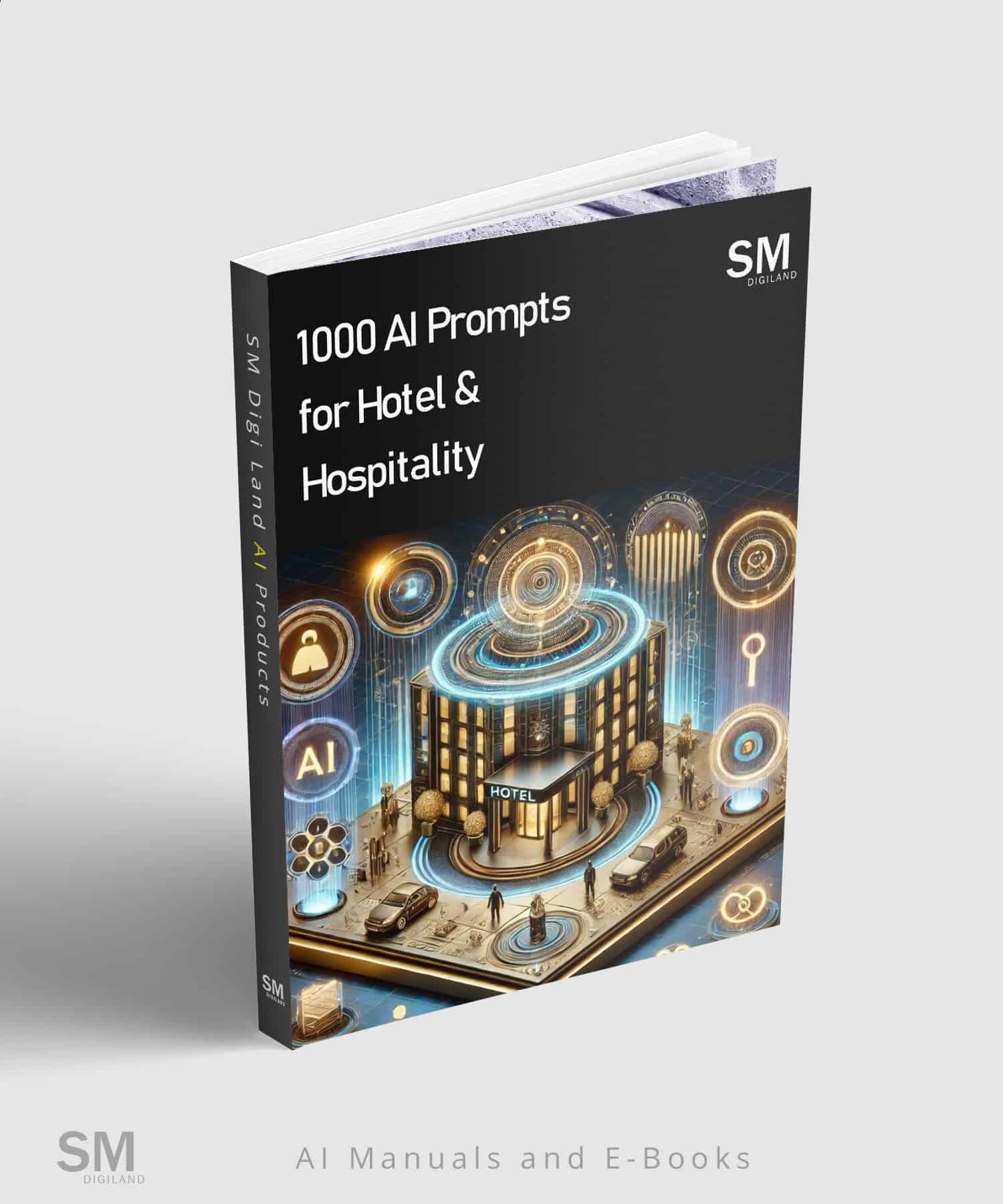
1000 AI Prompts for Hotels and Hospitality Management is a 117-page digital prompt book created to help hospitality professionals give generative-AI tools clearer, more complete, and more property-specific instructions.
The collection contains 1,000 customizable prompt frameworks organized into 10 focused chapters. It supports recurring activities across guest communication, reservations, marketing, reputation management, revenue planning, staff development, service recovery, events, operational coordination, and hospitality innovation.
This is not a collection of generic instructions such as “write a hotel advertisement” or “reply to this review.” The prompts help users define the property, guest segment, channel, service objective, operational limitations, approved information, desired tone, and output format before requesting a draft.
From Guest Intent to Service Execution
Generative AI can help hospitality teams organize information and prepare drafts, but it does not automatically know a property’s current rates, room inventory, cancellation terms, restaurant hours, accessibility features, transportation schedule, renovation status, event capacity, or approved service-recovery policy.
The prompts encourage users to provide the relevant operational context, including:
- Property type, location, positioning, and service level
- Guest segment and purpose of travel
- Stage of the guest journey
- Booking source and communication channel
- Current offer, package, rate, or room information
- Confirmed facilities and available services
- Brand voice and language requirements
- Operational restrictions and escalation procedures
- Desired action and output format
- Information requiring confirmation in the PMS, CRS, CRM, booking engine, or approved property records
This structure helps turn AI output into a more useful starting point while keeping property staff responsible for accuracy, approval, and final delivery.
What Is Included?
- 1,000 customizable AI prompt frameworks
- 10 chapters with 100 prompts in each chapter
- A practical Goal for every prompt
- A Usage section explaining the intended hospitality scenario
- An editable Prompt with context fields and output instructions
- Workflows covering both guest-facing and internal hotel activities
- Prompts for planning, drafting, analysis, comparison, training, and quality control
- Customizable fields for property type, guest profile, channel, offer, policy, language, tone, and service objective
- Applications for independent properties and multi-property hospitality businesses
- Frameworks that encourage users to distinguish confirmed information from assumptions
Ten Hospitality Workflow Areas Covered
1. Guest Communication and Service Personalization
Prepare pre-arrival messages, welcome information, amenity explanations, local recommendations, special-occasion communication, in-stay check-ins, departure reminders, and post-stay follow-ups using verified property information.
2. Hotel Marketing and Direct-Booking Campaigns
Develop campaign concepts, landing-page outlines, seasonal offers, email sequences, package descriptions, audience-specific messages, direct-booking content, promotional calendars, and creative briefs for hotel marketing teams.
3. Social Media and Online Reputation
Plan hotel content calendars, create platform-specific post ideas, develop visual-content briefs, prepare review-response drafts, organize reputation themes, and adapt property stories for different digital channels.
4. Upselling, Cross-Selling and Revenue Opportunities
Design relevant ancillary offers for room upgrades, dining, spa services, transportation, early arrival, late departure, celebrations, activities, and other confirmed services while respecting capacity, eligibility, and property policy.
5. Reservations, Arrival and the Guest Journey
Support reservation inquiries, booking confirmations, pre-arrival information, check-in instructions, arrival coordination, stay-extension communication, departure preparation, and guest-journey mapping.
6. Staff Training, Scheduling and Internal Communication
Create role-play scenarios, onboarding materials, service-standard checklists, shift handover formats, coaching questions, departmental briefings, microlearning activities, and internal communication drafts.
7. Guest Feedback and Service Recovery
Classify feedback themes, identify recurring operational issues, prepare acknowledgment drafts, structure service-recovery options, create follow-up questions, and organize learning points for management review.
8. Crisis Communication and Operational Problem-Solving
Prepare communication frameworks for disruptions, maintenance issues, overbooking scenarios, service interruptions, weather events, transportation problems, and other operational situations using approved escalation procedures.
9. Events, Groups and MICE Services
Support inquiries, event briefs, group proposals, venue descriptions, meeting agendas, attendee communication, banquet planning questions, promotional ideas, and follow-up workflows for meetings, incentives, conferences, exhibitions, and social events.
10. Sustainability and Hospitality Innovation
Develop guest education, internal initiatives, waste-reduction ideas, resource-use communication, local-community storytelling, sustainability FAQs, innovation workshops, and responsible technology-adoption plans.
How Every Prompt Is Structured
Every prompt follows a consistent three-part format:
- Goal: Defines the hospitality task the prompt is intended to support
- Usage: Explains where the prompt fits within a hotel workflow
- Prompt: Provides a detailed, editable instruction ready for customization
Depending on the task, editable fields may include [PROPERTY TYPE], [LOCATION], [GUEST SEGMENT], [JOURNEY STAGE], [BOOKING CHANNEL], [ROOM TYPE], [CONFIRMED AMENITIES], [OFFER DETAILS], [BRAND VOICE], [LANGUAGE], [PROPERTY POLICY], [OPERATIONAL LIMITATIONS], and [DESIRED OUTPUT].
Sample AI Prompts for Hotel Professionals
The following examples demonstrate the type of structured hospitality workflow supported by the collection. They should not be described as verbatim excerpts from the PDF unless they are compared directly with the published book.
Sample 1: Create a Pre-Arrival Guest Communication Sequence
Goal: Prepare a useful pre-arrival communication sequence based only on confirmed property and reservation information.
Usage: Use when developing email, SMS, WhatsApp, app, or booking-platform messages before a guest’s arrival.
Prompt:
Act as a hotel guest-communication assistant. Create a pre-arrival communication sequence using only the confirmed information supplied below. Do not invent amenities, rates, inclusions, policies, availability, transportation services, or local attractions.
Property type and positioning: [PROPERTY]
Location: [LOCATION]
Guest segment: [GUEST SEGMENT]
Purpose of travel: [TRAVEL PURPOSE]
Booking channel: [CHANNEL]
Arrival date and time, if known: [ARRIVAL DETAILS]
Room or package booked: [BOOKING DETAILS]
Confirmed inclusions: [INCLUSIONS]
Available ancillary services: [SERVICES]
Check-in requirements: [REQUIREMENTS]
Relevant policies: [POLICIES]
Communication channel: [EMAIL, SMS, WHATSAPP OR APP]
Language and brand voice: [LANGUAGE AND VOICE]
Primary objective: [OBJECTIVE]Provide:
- A recommended message sequence and timing
- A concise subject line or opening for each message
- The complete draft of each message
- A clear guest action where appropriate
- Optional personalization fields
- Information the property must confirm before sending
- Situations requiring staff follow-up
Keep the language welcoming, precise, and easy to scan. Do not request unnecessary personal data. Clearly mark any information that must be confirmed through the property’s approved systems.
Sample 2: Analyze Guest Feedback Without Inventing Conclusions
Goal: Convert supplied guest feedback into an evidence-based theme and action matrix.
Usage: Use for a periodic review of surveys, online reviews, complaint records, or post-stay feedback after personal data has been removed.
Prompt:
Act as a hospitality feedback-analysis assistant. Analyze only the anonymized feedback supplied below. Do not invent causes, guest characteristics, operational events, or statistical significance.
Property type: [PROPERTY TYPE]
Review period: [PERIOD]
Feedback sources: [SOURCES]
Departments in scope: [DEPARTMENTS]
Service standards: [STANDARDS]
Anonymized feedback: [PASTE FEEDBACK]
Known operational context: [CONTEXT]Create:
- A table of recurring positive and negative themes
- The number of supplied comments supporting each theme
- Representative paraphrased examples
- The guest-journey stage connected to each theme
- Possible operational questions for management to investigate
- Quick actions and longer-term actions clearly separated
- Departments that may need to participate
- Metrics that could be monitored after action is taken
- Issues requiring immediate escalation under the property’s policy
Distinguish direct evidence from possible explanations. Label every possible cause as a hypothesis requiring investigation. Do not reproduce guest names, reservation details, contact information, room numbers, or other identifying data.
Sample 3: Design a Property-Specific Ancillary Offer Plan
Goal: Develop relevant upsell and cross-sell ideas using current services, capacity, and commercial restrictions.
Usage: Use when planning pre-arrival or in-stay offers without allowing AI to invent prices or availability.
Prompt:
Act as a hotel ancillary-revenue planning assistant. Use only the confirmed products, services, prices, capacity limits, and policies supplied below.
Property type: [PROPERTY TYPE]
Location and demand context: [LOCATION AND CONTEXT]
Target guest segments: [SEGMENTS]
Stay patterns: [STAY PATTERNS]
Confirmed services: [SERVICES]
Current prices or approved price ranges: [PRICES]
Capacity and availability restrictions: [CAPACITY]
Eligible booking channels: [CHANNELS]
Communication touchpoints: [TOUCHPOINTS]
Brand positioning: [POSITIONING]
Commercial objective: [OBJECTIVE]
Exclusions and restrictions: [RESTRICTIONS]Provide:
- A prioritized list of relevant offers by guest segment and journey stage
- The operational requirements for each offer
- The recommended communication channel and timing
- A concise value proposition for each offer
- A sample message using the approved information
- Capacity, eligibility, and fulfillment checks required before launch
- Suggested measures for evaluating performance
- Risks that could negatively affect the guest experience
Do not invent availability, discounts, services, margins, or guest preferences. Do not use sensitive personal characteristics to target offers. State where current information must be confirmed in the property’s approved systems.
Who Is This Book For?
- Hotel owners and general managers
- Boutique-hotel and independent-property operators
- Resort and serviced-apartment teams
- Hotel marketing and e-commerce professionals
- Reservation and front-office teams
- Guest-relations and concierge professionals
- Revenue and commercial teams
- Food-and-beverage and spa marketers
- Human-resources and hotel-training teams
- Event, group-sales and MICE professionals
- Hospitality consultants and educators
- Students preparing for hospitality careers
Suitable Property Types
The prompt frameworks can be adapted to different hospitality businesses, including:
- Independent and boutique hotels
- Luxury and lifestyle hotels
- Business and airport hotels
- Beach and destination resorts
- Serviced apartments and aparthotels
- Hostels, guesthouses, and bed-and-breakfast properties
- Wellness retreats
- Hotel groups and multi-property portfolios
- Event venues with hospitality services
Users must customize the prompts according to the actual services, staffing model, technology, market, legal requirements, and brand standards of their own property.
How to Use the Prompts Effectively
- Select a prompt that matches the department and stage of the guest journey.
- Replace every placeholder with confirmed property information.
- Specify the guest segment, channel, language, tone, and desired action.
- Remove identifying or confidential guest information unless the selected AI environment is properly secured and authorized.
- Ask the AI to flag missing information instead of filling gaps.
- Check rates, inventory, operating hours, policies, and inclusions in the relevant property system.
- Review translations and culturally sensitive communication with an appropriate human reviewer.
- Confirm that each recommendation can be fulfilled operationally.
- Apply brand, accessibility, privacy, safety, and escalation requirements.
- Approve the final output before sending it to guests, partners, or employees.
Product Details
- Title: 1000 AI Prompts for Hotels and Hospitality Management
- Format: PDF digital book
- Length: 117 pages
- Language: English
- Number of prompts: 1,000
- Structure: 10 chapters with 100 prompts per chapter
- Prompt format: Goal, Usage, and Prompt
- Delivery: Instant digital download after purchase
- SKU: SMDL-DL-011
- Price: $19
Important Information About AI in Hospitality
Generative-AI systems may produce inaccurate, incomplete, outdated, culturally inappropriate, or invented information. An AI tool may create amenities that a property does not provide, use an expired offer, misstate a policy, recommend an unavailable room type, provide an incorrect local detail, or promise a service that employees cannot deliver.
Rates, taxes, room inventory, package availability, operating hours, transportation schedules, event capacity, cancellation conditions, payment requirements, accessibility features, and loyalty benefits must be verified using current approved property sources.
Guest names, passport or identification details, payment information, access codes, room numbers, contact details, health information, complaint records, travel documents, and reservation histories should not be entered into third-party AI platforms without appropriate authorization, security, and data-handling safeguards.
Emergency, safety, security, medical, evacuation, food-allergy, and crisis-related output must not replace trained personnel, official procedures, qualified professionals, emergency services, or local authorities.
What This Product Is—and Is Not
This product is a downloadable educational collection of customizable prompt frameworks for guest communication, hotel marketing, reservations, revenue opportunities, reputation management, staff development, feedback analysis, event planning, operational coordination, and hospitality innovation.
It is not a property-management system, central-reservation system, booking engine, channel manager, revenue-management platform, CRM, chatbot subscription, hotel consultancy, staff-training program, marketing service, translation service, or operational management service.
The purchase does not include access to ChatGPT, Claude, Gemini, Jasper, Copy.ai, a hotel technology platform, or another third-party AI service. Separate accounts or subscriptions may be required.
The book does not guarantee higher occupancy, additional direct bookings, increased ADR or RevPAR, improved review scores, reduced costs, stronger guest satisfaction, faster operations, staff performance, campaign results, or additional revenue.
Frequently Asked Questions
Does the book contain exactly 1,000 prompts?
Yes. It contains 10 chapters with 100 prompts in each chapter, providing a total of 1,000 customizable prompt frameworks.
Is the book only for large hotel chains?
No. The prompts may be adapted for independent hotels, boutique properties, resorts, serviced apartments, hostels, guesthouses, and multi-property hospitality groups.
Can the prompts write messages for hotel guests?
Yes. They can help prepare drafts for pre-arrival, booking, in-stay, departure, feedback, and post-stay communication. Every message must be checked against the confirmed reservation and current property information.
Can the book help with hotel marketing?
Yes. It covers campaign ideation, direct-booking content, social media, property storytelling, offers, email communication, audience planning, and other hospitality-marketing workflows.
Does the book connect directly to a PMS or booking engine?
No. The book contains text-based prompt frameworks. It does not include software integration, automation, API access, or a connection to a property-management or reservation system.
Can the prompts make pricing or revenue-management decisions?
They may help organize scenarios, offer ideas, questions, and analysis frameworks. Current inventory, market data, restrictions, pricing authority, commercial judgment, and approved revenue-management systems are still required.
Can I upload guest information to an AI platform?
Identifiable or confidential guest data should not be uploaded unless the AI environment and intended use have been properly assessed, secured, and authorized. Data-protection requirements vary by jurisdiction and organization.
Can the prompts respond automatically to online reviews?
They can prepare review-response drafts, but the context, tone, factual accuracy, platform policy, privacy considerations, and proposed resolution should be checked before publication.
Will the prompts work with every AI model?
The general frameworks can be adapted to different generative-AI tools, but features, privacy terms, context limits, supported languages, and output quality vary between platforms and model versions.
Is this a physical book?
No. It is a 117-page English PDF delivered digitally. No physical product will be shipped.
Build More Consistent AI Workflows Across the Guest Journey
Use these 1,000 customizable prompts to prepare more relevant guest communication, organize hotel marketing tasks, analyze feedback, support staff training, develop offers, and structure recurring hospitality workflows.
Download the 117-page PDF and adapt the prompts to your property, guests, services, brand voice, operational standards, and local market.


