
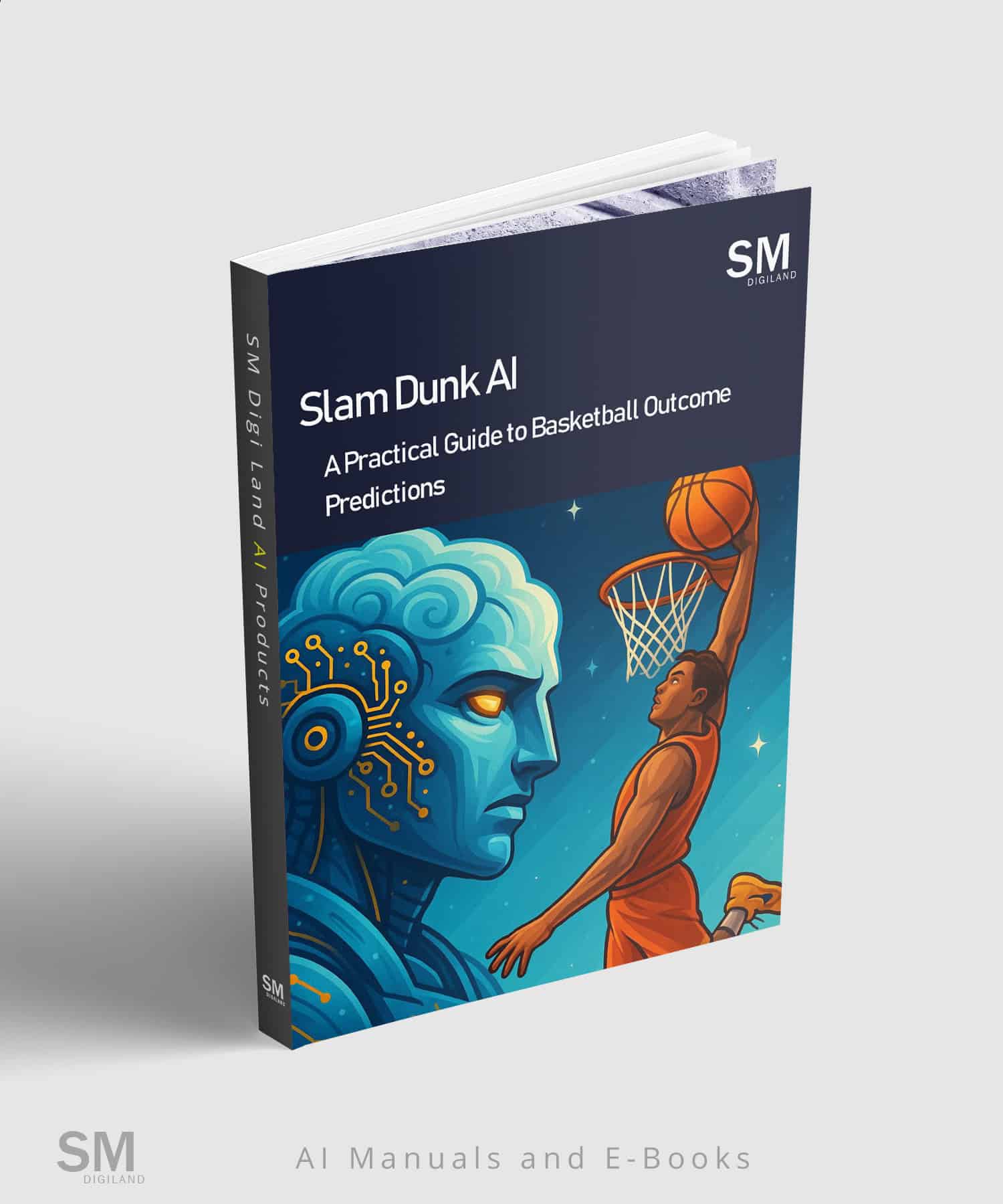


A More Structured Approach to Basketball Research
Basketball analysis involves more than looking at a final score. Team structure, player roles, pace, shot selection, possessions, lineups, injuries, competition level and data quality can all affect how historical performance should be interpreted.
AI-Assisted Basketball Research, Performance Analysis and Data Review is a 70-page English PDF containing customizable prompts and practical workflows for studying user-supplied basketball information, historical statistics, team and player performance, playing styles and analytical limitations.
The guide focuses on education, research and critical evaluation. It does not provide betting advice, wagering recommendations, guaranteed predictions, live scores, real-time odds or instructions to select a financial stake.
What Is Included?
- Customizable AI prompts for basketball research
- 70-page downloadable English PDF
- Team and player performance-analysis workflows
- Historical game and season-data review
- Basketball-statistics learning exercises
- Playing-style and matchup research
- Lineup and role-analysis frameworks
- Data-quality and calculation checks
- Alternative interpretation exercises
- AI hallucination and limitation reviews
- Instant digital delivery after purchase
Research and Learning Areas Covered
Team Performance Research
Develop structured questions about pace, possessions, offensive and defensive efficiency, shot distribution, rebounding, turnovers, lineup composition and other supplied team-performance information.
Historical statistics describe previous performance. They do not establish what will happen in a future game.
Player Performance Analysis
Organize research involving player roles, minutes, usage, shooting efficiency, assists, rebounds, defensive contributions and development over a selected historical period.
Player statistics should be interpreted in context. Coaching decisions, injuries, competition level, teammates, sample size and changes in role may materially affect the conclusions.
Historical Game and Season Review
Use prompts to examine supplied box scores, season summaries and documented game information. Compare performance across selected periods while clearly recording the dates, competitions and sources used.
An AI assistant should not be assumed to know the latest roster, score, injury report or competition statistics.
Playing Style and Matchup Research
Study how different playing styles interacted in completed games. Examine pace, spacing, transition play, half-court execution, defensive coverage and lineup characteristics using supplied information.
This is an educational review of basketball strategy and historical performance—not a recommendation to place a wager or predict a future result.
Basketball Statistics and Calculation Checks
Ask an AI assistant to explain formulas, identify required inputs, reproduce calculations and flag inconsistencies in supplied results.
AI-generated calculations may be incorrect. Important values should be independently reproduced using verified data and documented formulas.
Alternative Interpretations
Compare several plausible interpretations instead of accepting one confident AI-generated conclusion. Examine how sample size, timeframe, missing observations and different analytical assumptions can change the result.
Data Quality and Source Verification
Identify missing games, inconsistent player names, duplicate observations, unsuitable comparisons, unsupported assumptions and possible source-quality problems.
Material statistics should be checked against current and authoritative league, team or data-provider sources.
AI Limitations and Responsible Interpretation
Generative-AI systems can produce incorrect, incomplete, outdated or fabricated information. A detailed or confident response is not proof that the response is accurate.
How to Use the Guide
- Select a prompt relevant to your research objective.
- Replace bracketed variables with the required information.
- Identify the league, competition, season and date range.
- Provide the historical statistics or notes to be examined.
- State the source and meaning of each important metric.
- Ask the AI to separate observations from interpretations.
- Request visible formulas and calculation steps.
- Ask for missing information and alternative explanations.
- Independently verify material facts and calculations.
- Use the response as a research starting point.
Who Is This Guide For?
- Basketball students and enthusiasts
- Coaches and assistant coaches
- Players studying performance and development
- Sports-data and analytics students
- Researchers examining historical basketball data
- Educators preparing basketball-analysis exercises
- Content creators producing educational basketball material
- Users learning advanced AI-prompt customization
AI-Generated Information Must Be Verified
AI systems may invent or misinterpret:
- Game scores and dates
- Player and team statistics
- Rosters, injuries and transfers
- Lineup information
- Competition formats and rules
- Advanced statistical formulas
- Historical performance records
- Sources, quotations and external links
Users must independently verify material information before using it in education, coaching, research, publishing or professional work.
No Live Data, Betting Advice or Guaranteed Predictions
This product is a static PDF. It does not retrieve live scores, access real-time statistics, monitor games, calculate betting odds, connect to a sportsbook or place wagers.
It does not tell users which team or player to bet on, how much money to stake or how to improve betting returns. No prompt or AI model can guarantee a future sporting result.
Privacy and Confidentiality
Do not submit private player records, medical information, account credentials, payment details, API keys or confidential team information to an AI service.
Use public, fictional, anonymized or appropriately authorized information and review the selected AI provider’s current privacy, security, retention and data-use terms.
Third-Party AI Tools
The prompts may be adapted for ChatGPT and other compatible text-based AI assistants. Features, compatibility and output quality vary by provider, model, subscription and location.
The purchase does not include an AI subscription, sports-data service, API, coaching platform or other third-party product.
Product Details
- Title: AI-Assisted Basketball Research, Performance Analysis and Data Review
- Format: PDF digital guide
- Length: 70 pages
- Language: English
- Delivery: Instant digital download after purchase
- SKU: SMDL-OTH-006
- Price: $17.00, excluding applicable taxes
Frequently Asked Questions
Does this guide provide basketball betting tips?
No. It is designed for educational basketball research, performance analysis and data review.
Does it predict which team will win?
No. Historical analysis and AI-generated scenarios cannot establish a future sporting outcome.
Does the PDF include live scores or current statistics?
No. It is a static educational resource. Users must provide and verify any current or historical data required for their research.
Can coaches use the prompts?
Yes. The prompts can help organize research questions and review supplied performance information, but professional coaching judgement remains essential.
Does the purchase include an AI subscription?
No. AI accounts, subscriptions, API access, usage credits and sports-data services are separate.
Is programming knowledge required?
No programming is required to customize and use ordinary text prompts.
Is this a physical book?
No. It is delivered digitally as an English PDF. No physical product will be shipped.
Develop a More Critical Basketball-Research Workflow
Use the prompts to organize historical research, examine team and player performance, verify calculations and critically review AI-generated information.
This product is independently created and is not affiliated with, sponsored by, certified by or endorsed by OpenAI, Anthropic, Google, the NBA, EuroLeague, NCAA, any basketball team, league, federation or data provider. Third-party names and trademarks belong to their respective owners.


