


Learn How to Communicate More Effectively with Generative AI
Useful AI output rarely comes from a vague instruction alone. The quality of a response often depends on how clearly you define the task, provide context, describe the intended audience, set constraints, specify the format, and explain what a successful result should contain.
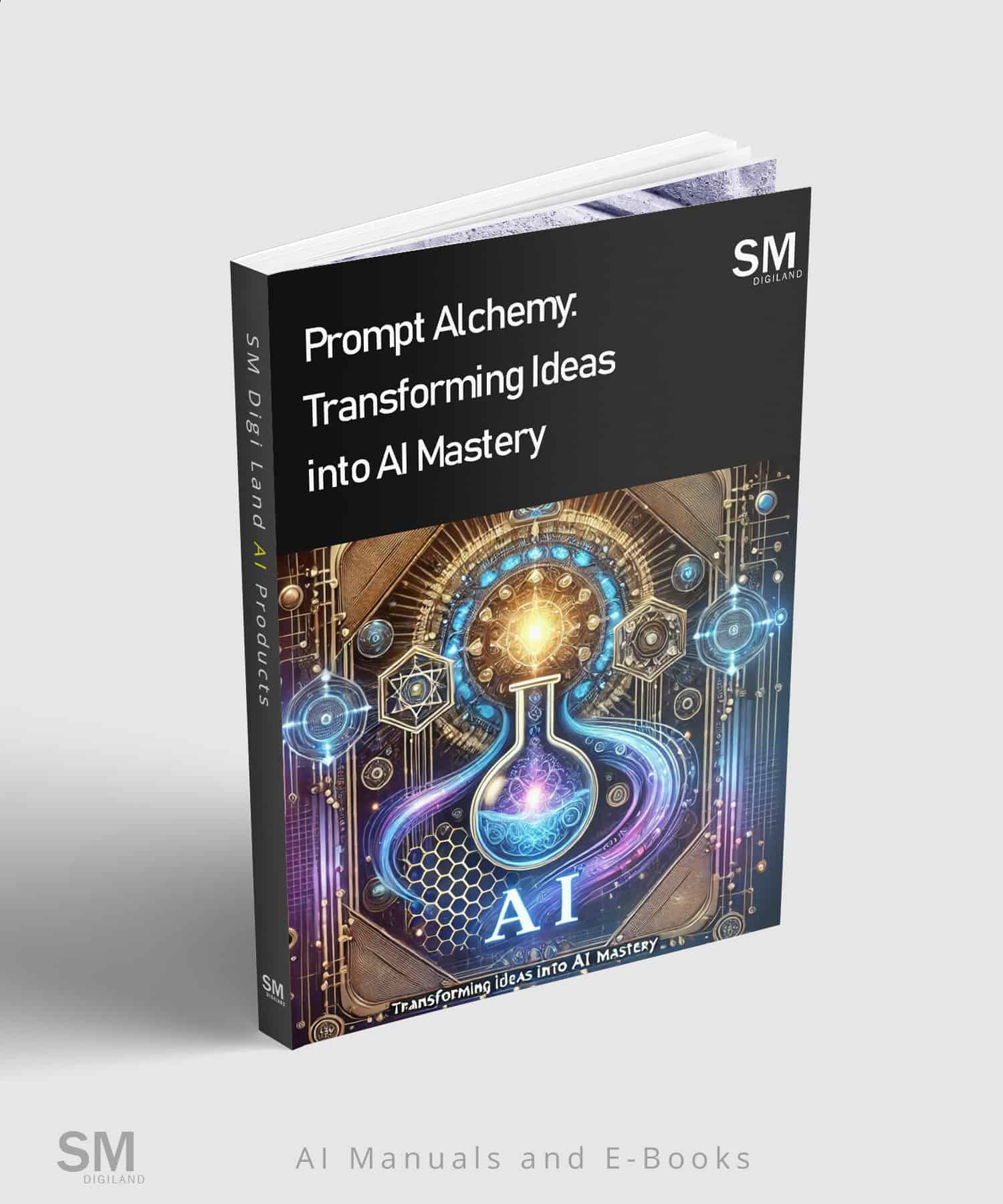
Prompt Alchemy: A Practical Guide to Prompt Engineering for Text and Image AI is a compact 33-page guide designed to help you develop more structured prompts for creative, professional, and educational tasks.
The guide introduces practical methods for transforming a simple idea into a prompt that gives an AI model clearer direction. It covers text generation, visual ideation, creative writing, marketing content, prompt refinement, troubleshooting, workflow organization, and responsible use.
Rather than presenting prompt engineering as a collection of secret commands, the book approaches it as a process of clear communication, experimentation, evaluation, and revision.
What Can This Prompt Engineering Guide Help You Learn?
- Understand what an AI prompt is and how it influences generated output
- Turn broad requests into more specific and actionable instructions
- Add context, audience, role, objective, format, tone, and constraints to a prompt
- Develop prompts for articles, stories, advertising, scripts, and other written content
- Create more structured visual prompts for image-generation tools
- Use references, styles, composition details, lighting, and visual constraints more effectively
- Break complicated tasks into smaller stages
- Refine an initial response through follow-up prompts
- Identify why a prompt produced an irrelevant, generic, or inconsistent response
- Build and organize a reusable personal prompt library
- Evaluate AI-generated content before using or publishing it
- Consider originality, attribution, accuracy, bias, and responsible AI use
Ten Focused Topics Covered in the Book
1. Fundamentals of Prompt Engineering
Explore the role of prompts in generative AI and understand why clarity, relevant context, and defined objectives can improve the usefulness of an AI-generated response.
2. Structuring More Effective Prompts
Learn how to combine task instructions, background information, audience details, tone, format, limitations, source material, and output criteria in a structured request.
3. Creative Ideation and Inspiration
Use AI to explore possibilities, develop alternative concepts, overcome creative blocks, expand an initial idea, and compare different creative directions.
4. Visual Prompts for Image-Generation Tools
Examine how subject, environment, composition, medium, style, perspective, lighting, colour, mood, technical requirements, and exclusions can shape an image prompt.
5. Writing Prompts for Stories, Advertising, Blogs and Scripts
Develop more focused prompts for different written formats by defining the reader, communication objective, structure, voice, length, evidence, and desired call to action.
6. Iterative Prompting and Refinement
Improve an initial response through follow-up instructions, targeted revisions, comparisons, feedback loops, and clearly stated evaluation criteria.
7. Turning a Creative Brief into an AI Workflow
Break a client or project brief into stages such as clarification, research planning, ideation, drafting, evaluation, revision, and final preparation.
8. Troubleshooting Common Prompt Problems
Investigate why an output may be generic, inaccurate, repetitive, inconsistent, poorly formatted, or disconnected from the intended audience—and determine what additional context may be needed.
9. Building a Personal Prompt Library
Create a reusable system for storing prompt frameworks, variables, examples, successful revisions, tool notes, project types, and quality-control checklists.
10. Ethics, Originality and the Future of Creative AI
Consider factual accuracy, privacy, bias, intellectual property, disclosure, human review, and the responsible use of AI-generated text and images.
Examples of Prompt Frameworks You Can Build
The following examples demonstrate the type of structured prompting approach discussed on this product page. They should be presented as sample frameworks, not as confirmed excerpts from the PDF unless they are compared with the actual book.
Sample 1: Transform a Vague Idea into a Structured Prompt
Goal: Convert an incomplete project idea into a detailed prompt without allowing the AI to silently invent missing information.
Prompt:
Act as an AI prompt-design assistant. Help me transform the basic request below into a clear and reusable prompt.
Basic request: [INSERT THE ORIGINAL IDEA]
Primary objective: [OBJECTIVE]
Target audience: [AUDIENCE]
Desired output: [FORMAT]
Tone or visual direction: [TONE OR STYLE]
Available background information: [CONTEXT]
Required elements: [REQUIREMENTS]
Restrictions: [LIMITATIONS]First, identify any important information that is missing or ambiguous. Ask no more than five essential clarification questions. After I answer, create:
- A concise version of the prompt
- A detailed version with context and constraints
- A reusable template containing editable fields
- A checklist for evaluating the generated result
Do not assume facts that I have not provided. Clearly label any optional creative suggestions.
Sample 2: Create a Detailed AI Image Prompt
Goal: Develop an image-generation prompt with a defined subject, composition, mood, and technical output.
Prompt:
Act as a visual prompt designer. Create a detailed image-generation prompt based on the information below.
Main subject: [SUBJECT]
Action or pose: [ACTION]
Environment: [ENVIRONMENT]
Artistic medium or visual style: [STYLE]
Composition: [COMPOSITION]
Camera angle or perspective: [PERSPECTIVE]
Lighting: [LIGHTING]
Colour palette: [COLOURS]
Mood: [MOOD]
Aspect ratio: [RATIO]
Required details: [DETAILS]
Elements to avoid: [EXCLUSIONS]Produce three versions:
- A concise tool-neutral prompt
- A detailed cinematic version
- An experimental artistic variation
Keep the subject, required details, and exclusions consistent across all three versions. Do not include living artists’ names unless I explicitly provide an authorized reference and its use is appropriate.
Sample 3: Diagnose and Improve a Weak AI Response
Goal: Determine why an AI response failed and create a stronger revision prompt.
Prompt:
Act as a prompt-quality reviewer. Analyze the original prompt and AI-generated response below.
Original prompt: [INSERT PROMPT]
Generated response: [INSERT RESPONSE]
Intended purpose: [PURPOSE]
Target audience: [AUDIENCE]
Expected format: [FORMAT]
Known problems: [PROBLEMS]Evaluate the response for relevance, accuracy, completeness, clarity, tone, structure, originality, and compliance with the stated requirements.
Then provide:
- A diagnosis of the main prompt weaknesses
- Missing context or constraints
- A revised prompt
- A short follow-up prompt for improving the existing response
- A five-point quality-control checklist
Do not verify factual claims unless supporting sources or reliable reference material have been provided. Flag claims that require independent verification.
A Practical Prompt Structure
Many effective prompts can be developed by combining the following elements:
- Role: The perspective or expertise the AI should apply
- Task: The specific action the AI should perform
- Context: Relevant background information
- Audience: The people for whom the output is intended
- Input: Source material, data, examples, or project information
- Requirements: Elements that must appear in the result
- Constraints: Facts, formats, claims, or approaches that must be avoided
- Output format: The desired structure, length, language, or file type
- Evaluation criteria: The standards by which the output should be reviewed
Not every prompt requires every element. The appropriate structure depends on the complexity, risk, audience, and intended use of the task.
How to Get Better Results from the Guide
- Begin with a real task instead of studying prompt writing only in theory.
- Define what a useful result should accomplish before writing the prompt.
- Provide relevant context, source material, audience information, and restrictions.
- Use editable fields to turn successful prompts into reusable templates.
- Ask the AI to identify missing information rather than silently fill gaps.
- Compare several outputs and note which prompt changes affected the results.
- Use follow-up prompts to revise specific weaknesses instead of repeatedly starting over.
- Save successful prompts together with the model, purpose, date, and useful output examples.
- Review all generated content for accuracy, appropriateness, originality, and compliance before using it.
Who Is This Guide For?
- Beginners learning how to use generative AI more effectively
- Writers developing stories, articles, scripts, and creative concepts
- Artists and designers preparing visual concepts and image prompts
- Content creators planning posts, videos, and digital campaigns
- Marketers creating briefs, copy drafts, and campaign ideas
- Entrepreneurs using AI for recurring creative and communication tasks
- Teachers and students exploring responsible educational applications of AI
- Freelancers developing repeatable AI-assisted workflows
- Professionals building a personal prompt library
Product Details
- Title: Prompt Alchemy: A Practical Guide to Prompt Engineering for Text and Image AI
- Format: PDF digital guide
- Length: 33 pages
- Language: English
- Structure: 10 focused chapters
- Delivery: Instant digital download after purchase
- SKU: SMDL-DL-005
- Price: $21
Text AI and Image AI Require Different Instructions
Text-generation prompts commonly focus on the task, audience, context, tone, structure, evidence, length, and required message. Image-generation prompts generally place greater emphasis on the subject, environment, composition, artistic medium, perspective, lighting, colour, mood, aspect ratio, and visual exclusions.
The same prompt will not necessarily produce equivalent results across different tools. Each platform may interpret instructions differently and may support different parameters, image-reference features, context lengths, file types, or safety restrictions.
Important Information About AI Tools
AI platforms, model names, interfaces, pricing, features, and usage policies can change. References to tools such as ChatGPT, DALL·E, Midjourney, or Stable Diffusion describe relevant prompting contexts but do not guarantee compatibility with every version, feature, subscription, or third-party implementation.
Access to ChatGPT or any other AI service is not included with this purchase. Some platforms may require a separate account or paid subscription.
Accuracy, Originality and Responsible Use
AI-generated content may contain inaccurate statements, invented details, bias, repetition, or material that requires further editing. Users should verify factual claims and review every output before publishing it or using it for professional, educational, financial, medical, legal, or client-facing purposes.
Users are also responsible for protecting confidential information, obtaining necessary permissions, following applicable laws and platform rules, and considering intellectual-property and disclosure requirements.
What This Product Is—and Is Not
This product is a downloadable educational guide introducing practical prompt-engineering concepts and workflows for text and image AI.
It is not a physical book, AI application, ChatGPT subscription, image-generation service, professional certification, personalized consulting service, or guaranteed method for producing a specific result.
The guide does not guarantee that every prompt will produce an accurate, original, publishable, or commercially successful output. Results depend on the selected AI tool and model, the information provided, prompt structure, task complexity, platform limitations, and human review.
Frequently Asked Questions
Do I need coding or technical experience?
No. The guide focuses on communicating instructions to generative AI in plain language. Coding is not required for the techniques described on this page.
Is this a book of 1,000 prompts?
No. Prompt Alchemy is a 33-page educational guide about developing, structuring, refining, and organizing prompts. It should not be confused with SM DigiLand’s 1,000-prompt book series.
Is the guide suitable for beginners?
Yes. It introduces foundational concepts while also covering practical techniques such as iterative prompting, structured workflows, troubleshooting, and prompt-library development.
Does the guide cover both writing and image generation?
Yes. Its listed subjects include prompts for written content as well as visual prompting for tools such as DALL·E, Midjourney, and Stable Diffusion.
Can I use the methods with ChatGPT, Claude or Gemini?
Many general prompt-structure and refinement methods can be adapted for conversational AI assistants. However, outputs and supported features vary by platform and model.
Will the same image prompt work identically in every image generator?
No. Different image-generation models interpret language, style, references, composition, and technical parameters differently. Prompts normally require tool-specific testing and adjustment.
Does the purchase include access to AI tools?
No. This purchase includes only the downloadable PDF guide. Any required third-party account or subscription must be obtained separately.
Can I reuse the prompt frameworks?
Yes. You can adapt the techniques and frameworks to different personal or professional projects, subject to the product’s licence and terms of use.
Will this guide make me a certified prompt engineer?
No. It is an educational resource and does not provide an accredited qualification or professional certification.
Is this a physical book?
No. It is an English-language PDF delivered digitally. No physical product will be shipped.
Develop a More Intentional Prompting Process
Use Prompt Alchemy to move beyond vague one-line requests and develop a more deliberate process for giving context, defining outputs, testing creative directions, refining responses, and organizing successful prompt frameworks.
Download the guide and apply its methods to your writing, visual ideation, content creation, marketing, education, and creative AI workflows.


